
How We Use Archery To Teach STEM In Our Homeschool
As homeschool parents, we’re always looking for hands-on ways to bring learning to life. We want our kids to not only understand concepts—but to experience them. That’s exactly what archery does.
What may look like a simple shooting sport on the surface is actually packed with opportunities to teach physics, mathematics, and critical thinking. Archery has become a cornerstone of our homeschool—not just for physical education, but for STEM learning too. And the best part? Your kids won’t even realize they’re “doing school.”
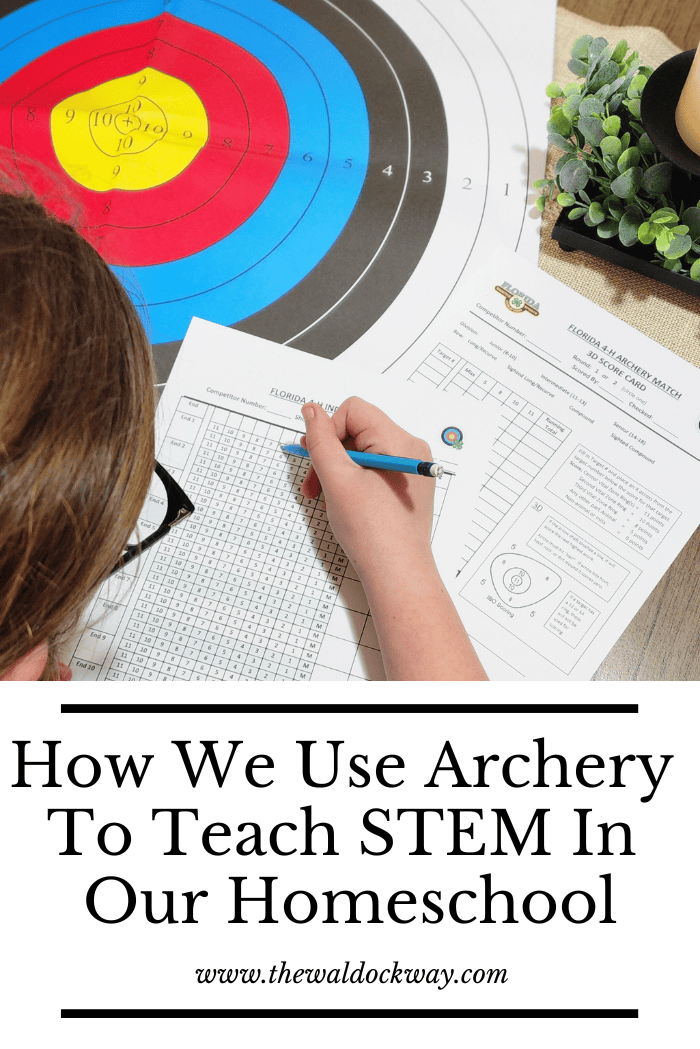
How Archery Hits the Bullseye When it Comes to Science and Math
At first glance, archery seems like just a fun way to spend time outside. But every pull of the string, every arrow released, and every hit (or miss) on the target becomes a moment of applied science and math.
This is hands-on learning in the most literal sense. Your child isn’t just reading about angles or force. They’re using them. They’re seeing how tiny adjustments make a big difference. And they’re thinking through what to try next, based on what just happened.
With archery, kids are:
- Analyzing patterns in their shots
- Making predictions and testing them
- Recording results and noticing trends
- Measuring performance and calculating averages
- Reflecting, adjusting, and trying again
This isn’t just academic theory. It’s applied science and math in action. Whether you’re out in the backyard or at a 3D archery range, the learning is happening naturally, often without your kids even realizing it. And because it’s grounded in a real activity they enjoy, they’re far more likely to stay engaged, retain information, and build genuine understanding.
Let’s break it down a little more to show exactly how archery delivers STEM learning in motion.
Archery + Physics = Learning in Motion
Archery is full of real-world physics. It’s one thing to read about kinetic energy. It’s another to feel it.
Core concepts your kids will observe in action:
- Force and energy transfer: Pulling the bowstring stores energy. Letting go releases it into the arrow.
- Trajectory and gravity: Arrows follow an arc. You can talk about why that happens and how angle plays a role.
- Friction and air resistance: Why does the arrow slow down? What do the feathers (fletching) do?
STEM Challenge: Let your child change up their draw length or the angle of release and track what happens. Use a tape measure to track distances and a stopwatch to time arrow flight. Then graph the results together.
Archery as a Real-World Math Lab
Math in archery isn’t just practical—it’s unavoidable. Every round of arrows brings opportunities to practice meaningful math.
Skills your child uses with each shot:
- Addition and multiplication: Keeping score and calculating total points across rounds
- Angles and geometry: Adjusting stance, arm position, and release angle
- Measurement and estimation: Estimating distance, measuring arrow groupings, and calculating average scores
STEM Challenge: Make a printable scorecard and track your scores during a session. Let your child calculate their average per round, find their highest and lowest scores, and graph progress over time..
Archery as a Scientific Method
Archery naturally leads to scientific thinking. Your child sees a problem, makes a guess, tests it out, and learns from the outcome.
Real questions your homeschooler might ask:
- Will using a heavier arrow help me hit the target at a longer distance?
- Does wind change where my arrow lands?
- What happens if I adjust my anchor point?
These aren’t just guesses. They’re experiments. Your child is learning to test variables and observe results. It’s a natural introduction to the scientific method without needing a lab coat.
STEM Challenge: Have your child choose one variable to change—maybe target height or arrow weight. Then let them record the results and create a short presentation or mini “lab report.”
Cross-Curricular STEM Tie-Ins
You can take archery even further by connecting it to other subjects.
- Technology: Look into how different bow materials affect speed and accuracy.
- Engineering: Try designing a better quiver or building a simple bow together.
- History: Study ancient cultures that used archery or explore famous figures like Robin Hood, William Tell, or Olympic archers.
Pair archery with a unit study on medieval history, indigenous cultures, or survival skills to deepen the learning.
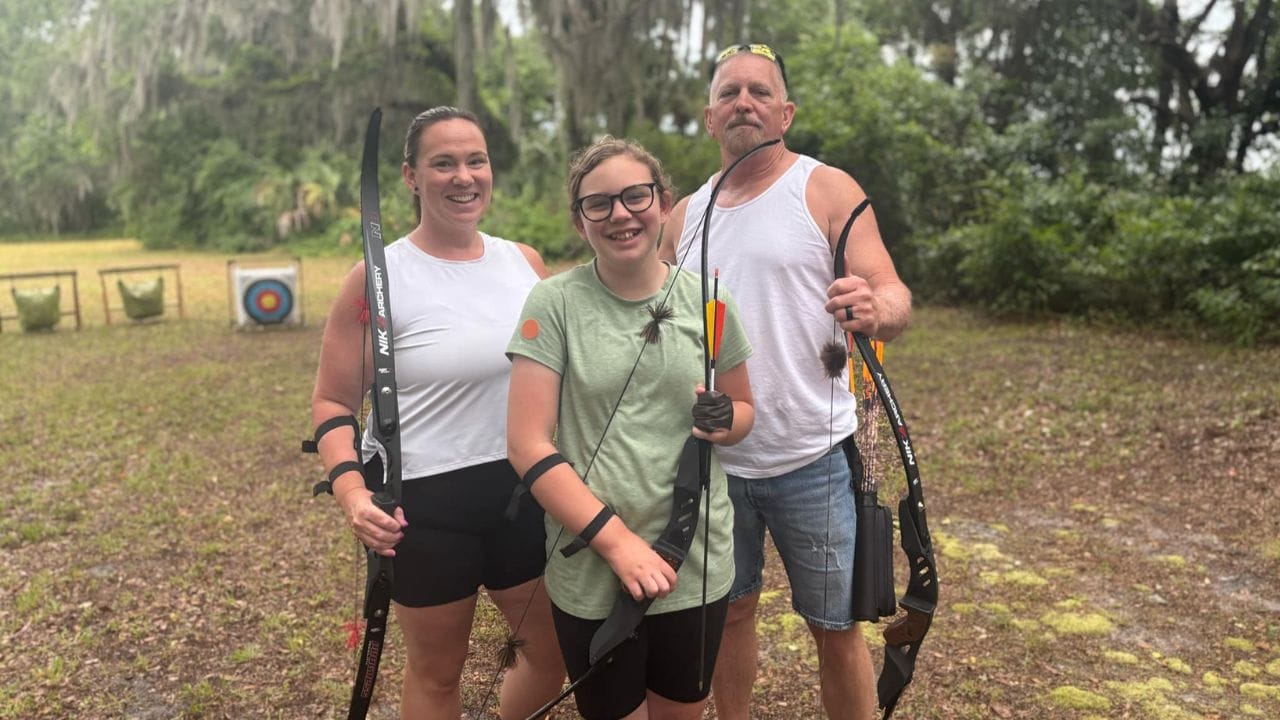
A STEM Sport the Whole Family Can Do Together
One of the reasons we love archery so much is that it’s something we can all do together. With different shooting stakes based on age or ability, it works for kids, teens, parents, and even grandparents.
If you’re looking for a meaningful way to explore STEM together as a family, without relying on screens or worksheets, archery is a great fit.
Everything we’ve learned has been thanks to the patient teaching of Emily’s grandfather, Pat Ditto, from Ascham Oaks Archery. His experience and passion have helped us blend physical activity with real learning in the most enjoyable way.
So if your child isn’t loving math or science right now, try putting a bow in their hands. Let them feel the concepts. Let them tinker and test and figure things out. Archery has given us a way to make learning real and fun. And for us, that’s a bullseye!