
How to Homeschool High School: Credits, Transcripts, Record Keeping & Planning Made Easy
Have you experienced the high school panic moment yet? It’s that moment when everything starts to feel like it actually counts. The high school years carry more weight. It’s only natural that we start to stress about how to homeschool high school.
The good news is that homeschooling high school doesn’t have to be stressful. In fact, it can actually be simple with the right system. I’m excited to break it all down and share my best tips for planning high school, counting credits, keeping records, and creating homeschool transcripts.
Learning how to homeschool high school can feel intimidating at first. Parents often wonder how to award credits, create a homeschool transcript, keep records, and meet graduation requirements. The good news is that homeschooling high school is much simpler than it seems. Once you understand the basics of credits, transcripts, and record keeping, you’ll have everything you need to confidently plan your teen’s high school years.
High school planning just hits different. It’s important, but it doesn’t have to feel so hard. Homeschooling the next four years can be easy. I’m excited to show you how!

Why High School Planning Feels Different (and Why It Doesn’t Have to Be)
It doesn’t have to feel harder when your teen reaches high school. The workload doesn’t have to change.
This is when colleges, employers, scholarship committees, and other organizations may have access to your teen’s records, so the visibility is real. But the stress response to it isn’t necessary and probably won’t actually help us plan a successful high school experience.
The extra visibility can lead to comparison, and before you know it, you might be tempted to recreate public school at home. Many families find themselves falling into that trap. Fortunately, we don’t have to copy public school to homeschool high school successfully.
High school doesn’t have to feel different. We still have the flexibility to make the most of these four years without signing up for the added stress of reinventing public school. It’s all about knowing the rules of the game.
The truth is that most of what you’ve already been doing still works. You don’t need a completely new homeschool. You simply need a way to document learning, award credits, and keep records. That’s it.

Understanding Credits: How Much Is “Enough”?
So let’s dig in, starting with credits. After all, most of the stress we experience about planning the next four years is related to not knowing how credits actually work.
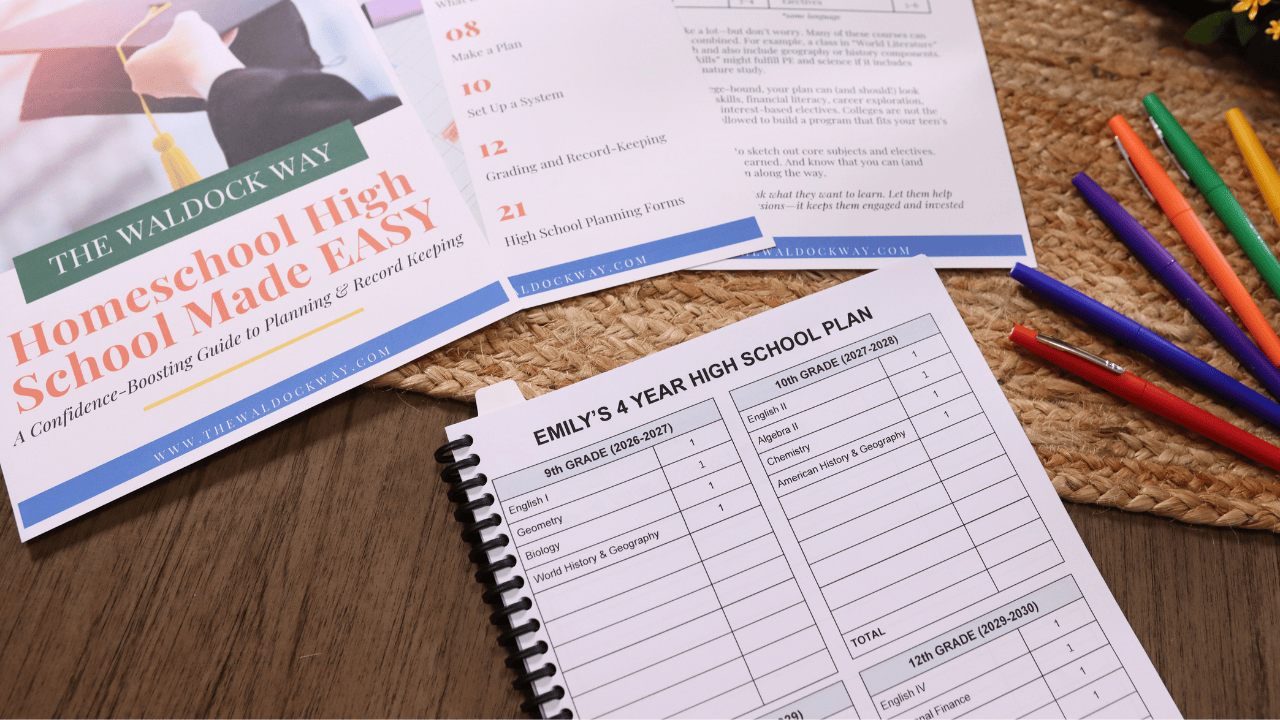
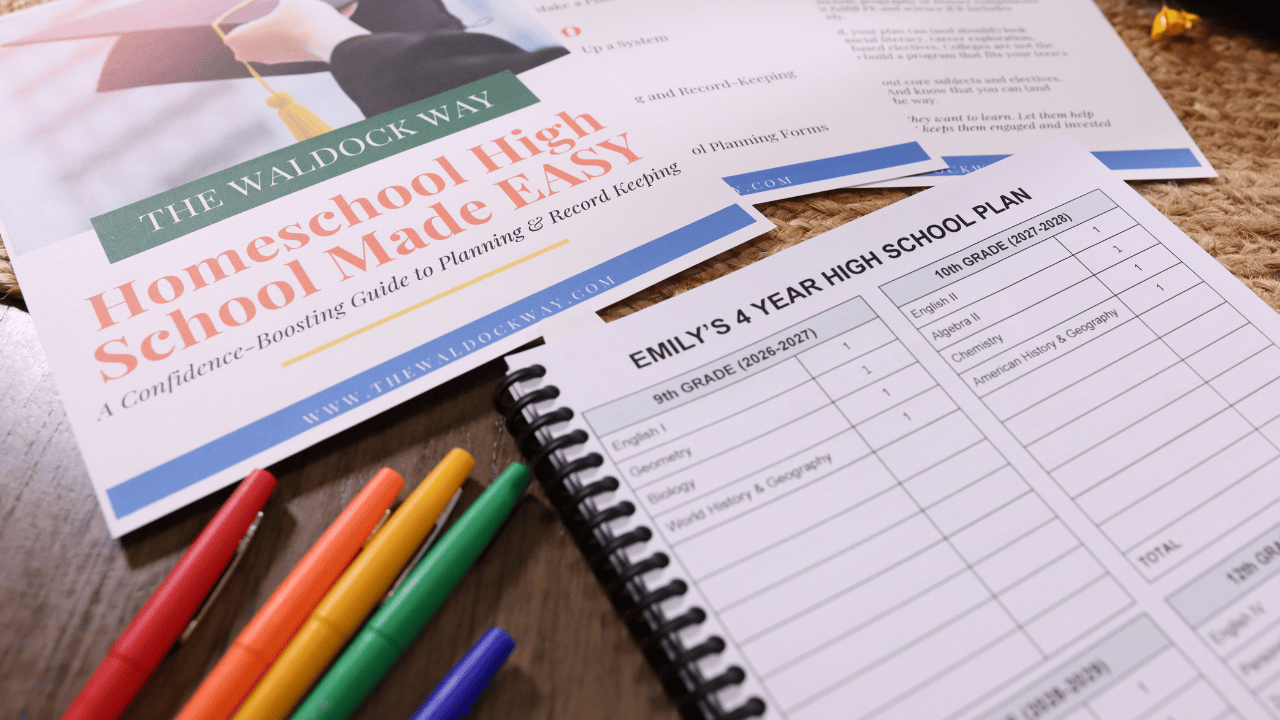
In our Homeschool High School Made Easy guide, we outline exactly how to measure credits so you’ll know what “counts” before you have to keep track. Plus, you’ll discover four different ways to award credits.
Some families count credits by tracking completed curriculum. Others log hours. Some award credits based on mastery, while others use projects, internships, and real-world experiences to demonstrate learning. There isn’t one right way to do it.
Ultimately, if you can describe the learning that took place and show how your teen engaged with the material, it counts toward high school credit.
One of the biggest mindset shifts for homeschool parents is realizing that learning doesn’t only happen through textbooks. Volunteer work, apprenticeships, documentaries, research projects, independent reading, travel experiences, and hands-on learning can all contribute to a meaningful high school education.
With these tips, you’ll be able to make credits work for you instead of the other way around.
Understanding Homeschool Graduation Requirements
Another common concern is homeschool graduation requirements. The first thing to know is that graduation requirements vary from state to state. Some states have specific expectations, while others give homeschool families much more flexibility. Before planning your teen’s high school years, it’s important to understand your state’s homeschool laws and requirements.
For college-bound students, most admissions offices generally expect to see a strong academic foundation that includes:
- 4 credits of English
- 4 credits of Math
- 3-4 credits of Science
- 3-4 credits of Social Studies
- 2-3 credits of the same Foreign Language
- 1 credit of Fine Arts
- 1-2 credits of PE and Health
- Several elective credits
That might sound like a lot, but many homeschool courses naturally overlap. A literature course may include history and geography. An entrepreneurship course might combine business, economics, and personal finance. A science-based outdoor program could incorporate both science and physical education.
If your teen isn’t college-bound, your homeschool graduation requirements can and should reflect their goals. Trade school, military service, entrepreneurship, certifications, apprenticeships, and workforce preparation are all valid pathways after high school.
The goal isn’t to build someone else’s transcript. It’s to create a high school plan that prepares your teen for the future they want.

Building a Homeschool Transcript That Works for You
After credits, creating a homeschool transcript is often the next big source of confusion for parents. Fortunately, building a homeschool transcript is easier than you might think.
A homeschool transcript is simply a one-page summary of your teen’s high school coursework. It provides an organized overview of what they studied throughout high school.
A homeschool high school transcript should include:
- Student name and contact information
- Expected graduation date
- Courses completed
- Grades earned
- Credit values
- Total credits earned
- GPA (if you choose to calculate one)
Homeschool transcripts are one of the most official-looking documents you’ll ever create, but they’re not actually difficult to build. In fact, if you’ve been keeping records throughout high school, you’re already doing most of the work.
Part of the reason homeschool transcripts feel so intimidating is that we wonder, “Will colleges take my homeschool transcript seriously?” The answer is yes.
Colleges have been admitting homeschooled students for decades. Most admissions offices are very familiar with homeschool transcripts and understand that homeschool education doesn’t always look exactly like traditional school.
Colleges aren’t evaluating whether your homeschool transcript looks identical to a public school transcript. They’re looking for a document that is clear, organized, consistent, and demonstrates meaningful academic work. That’s good news for homeschool parents.
Record Keeping: The Unsung Hero of Homeschool High School
Record keeping is certainly important for creating a homeschool transcript, but it goes beyond that. Course descriptions, reading lists, volunteer hours, and work samples are all examples of records that help tell the story of your teen’s education. They’re the unsung heroes of homeschool high school.
Course Descriptions
Course descriptions are where you show what those transcript titles truly mean. They’re especially important for college admissions officers who don’t know how a course like “Creative Writing & Publishing” looked in your homeschool.
A good homeschool course description explains:
- What the course covered
- How it was taught
- What resources were used
- What assignments or projects were completed
- How much credit was awarded
Course descriptions help transform a simple transcript into a fuller picture of your teen’s education.
Reading Lists
Reading lists are another valuable record to keep. They demonstrate the depth and breadth of what your teen studied, particularly in literature, history, social studies, and elective courses. A strong reading list can help showcase academic rigor while highlighting your teen’s interests.
Work Samples
Work samples can include:
- Essays
- Research papers
- Lab reports
- Presentations
- Art portfolios
- Projects
- Published writing
A homeschool transcript shows what your teen studied. Work samples show how well they learned it.
Volunteer Hours and Extracurricular Activities
Don’t forget to track activities outside traditional coursework. Volunteer work, internships, clubs, leadership positions, certifications, part-time jobs, and community involvement all contribute to your teen’s high school experience.
These experiences can strengthen college applications, scholarship applications, and resumes while helping your teen develop valuable real-world skills.
The good news for parents is that keeping records doesn’t require a complicated filing cabinet or expensive software. A simple digital folder works perfectly.
We keep ours on the computer and add items throughout the year as they happen. The secret isn’t a fancy system. It’s consistency. A few minutes every semester can save hours of stress later.
Bringing It All Together
When credits, transcripts, graduation requirements, and record keeping work together as one system, they stop feeling like four separate headaches.
That’s exactly why we created Homeschool High School Made Easy.
This guide brings everything together in one place and walks you through the process step by step. From understanding homeschool credits and creating a homeschool transcript to writing course descriptions and keeping records, you’ll find practical tools and encouragement for every stage of the journey.
The truth is that homeschooling high school isn’t about recreating public school at home. It’s about documenting learning, tracking progress, and creating a plan that helps your teen reach their goals. Once you understand credits, transcripts, and record keeping, the high school years become far less intimidating and much more enjoyable.
If you’re ready to simplify homeschool high school planning, grab the Homeschool High School Made Easy guide and start building a system that works for your family.